Fungus Gnat: 10 Powerful Ways to Get Rid of Them Fast
A fungus gnat problem usually starts in the pot rather than in the air. These tiny, dark flies breed in moist growing media, where their larvae feed primarily on fungi and decaying organic matter and may also feed on plant roots. Killing the adults around your windows will reduce the nuisance, but it will not solve the infestation if the soil or growing medium remains suitable for another generation.
For Connecticut homeowners wondering how to get rid of gnats around houseplants, the best strategy combines accurate identification, careful moisture management, adult monitoring, and control of the immature stages.
This guide explains 10 practical fungus gnat control methods, how to distinguish plant gnats from fruit flies and drain flies, what commonly causes infestations, which DIY remedies don’t match the pest’s biology, and when homeowners in Fairfield County should consider a professional inspection.
What Is a Fungus Gnat?
Fungus gnats are small flies commonly associated with moist soil, potting mixes, greenhouses, and indoor plants. Several groups are called fungus gnats, with members of the family Sciaridae among those commonly encountered around houseplants.
The adults are slender and delicate, often with long legs and antennae. Homeowners sometimes describe them as miniature mosquitoes.
Adults are primarily a nuisance. The larval stage is what matters for control.
Fungus gnat larvae develop in moist organic growing media. They feed on fungi and decaying plant material, and some species may feed on roots.
This creates the central rule of fungus gnat control:
Treat the environment producing the adults, not just the adults flying around the room.
How do you get rid of fungus gnats?
To get rid of fungus gnats, confirm they are coming from houseplants, adjust watering so growing media do not remain unnecessarily wet, improve appropriate drainage, remove decomposing plant debris, monitor adults with sticky cards, and use plant-appropriate larval controls when needed. Continue monitoring because adult traps alone do not eliminate larvae in the pot.
The University of Connecticut Home & Garden Education Center is also a useful local source for Connecticut horticultural information.
Fungus Gnat Identification: What Do They Look Like?
Fungus gnats are small enough that homeowners often identify them based on location before getting a good look at the insect.
That can lead to mistakes.
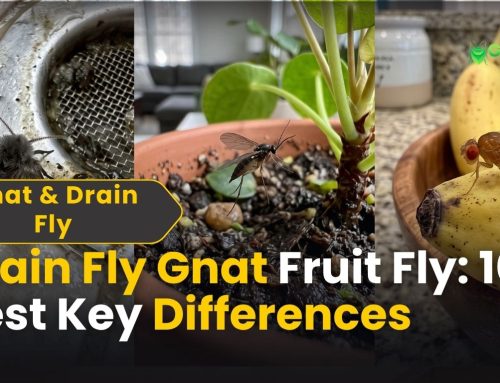
Adult fungus gnats are generally dark, slender flies. They have relatively long legs and antennae, with clear or grayish wings. Their proportions can make them look like tiny mosquitoes.
They are not miniature mosquitoes, however.
Watch their behavior around plants. Adults often move across the growing medium, hover close to pots, fly around foliage, and eventually turn up on nearby windows.
If disturbing or watering a plant causes several tiny dark flies to move from the pot, fungus gnats should be high on your identification list.
Fungus Gnat vs. Fruit Fly vs. Drain Fly
“Plant gnat,” “fruit fly,” and “drain fly” are frequently used interchangeably online even though these insects have different developmental habitats.
| Feature | Fungus Gnat | Fruit Fly | Drain Fly |
| Shape | Slender, mosquito-like | Compact | Fuzzy, moth-like |
| Common color | Dark | Tan/brownish | Gray/brown/dark |
| Main indoor location | Houseplants | Kitchens and food areas | Wet areas and drains |
| Larval habitat | Moist growing media | Fermenting organic matter | Wet organic material |
| ACV trap | Not primary control | Useful for adults | Not primary control |
| Main strategy | Manage plant environment | Remove fermenting source | Remove wet organic source |
If you’re still uncertain, compare the pest using Green Pest Management CT’s drain fly, gnat, and fruit fly identification guide.
For an even broader small-fly comparison, see the Gnat & Drain Fly Control Hub.
Fungus gnat vs. fruit fly
Fruit flies tend to have a stockier body than fungus gnats. Some common fruit-fly species also have distinctive reddish eyes.
Behavior provides another useful clue.
Fruit flies often gather around bananas, tomatoes, wine, beer, juice, recycling, and fermenting food. Fungus gnats are far more strongly associated with moist plant-growing media.
Our fly vs. gnat identification guide can help when pictures alone aren’t enough.
Fungus gnat vs. drain fly
Drain flies have the easiest silhouette to distinguish once you see one clearly. Their broad, fuzzy wings give them a small moth-like appearance.
Fungus gnats are narrow and delicate.
If the insects consistently rest around bathroom plumbing rather than plant pots, don’t begin treating every houseplant.
Green Pest Management CT’s drain fly vs. fruit fly comparison provides additional information for insects concentrated around sinks.
Why Do Fungus Gnats Suddenly Appear?
Fungus gnats don’t appear because a houseplant owner did one specific thing wrong. Several conditions can contribute to an infestation.
An infested plant or growing medium can introduce insects. Adults can also find suitable plant containers after entering a home.
Once present, consistently moist growing media provide favorable larval habitat.
The problem may become noticeable after watering frequency increases, plants are grouped together, new plants arrive, or indoor environmental conditions change.
Overwatering is a common contributor
“Overwatering” needs some qualification.
It does not simply mean adding a large volume of water once. It can also describe watering frequently enough that the growing medium stays wet for extended periods.
What qualifies as excessive depends on the plant.
A succulent and a moisture-loving tropical plant should not be watered the same way.
The goal of fungus gnat management is not to dry every plant completely. It’s to avoid unnecessary, continuous moisture while still meeting horticultural requirements.
Signs of a Fungus Gnat Infestation
Adult activity provides the most obvious clue.
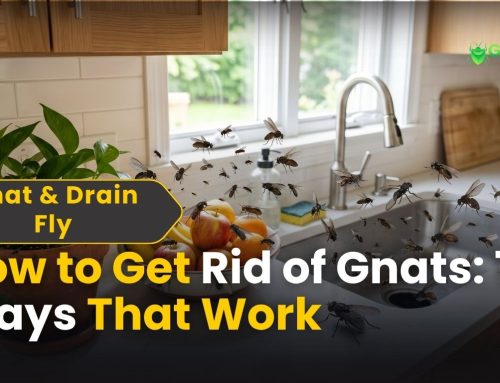
You may see tiny dark flies walking across potting mix, hovering around plant containers, flying upward when plants are disturbed, or gathering near windows.
Seedlings or other vulnerable plants may show stress when larval populations are high, although plant symptoms alone cannot diagnose fungus gnats.
Root problems, watering issues, nutrient imbalance, disease, and environmental stress can produce similar symptoms.
A practical inspection starts with the insect, then the pot.
Look at where adults are concentrated and compare several plants rather than assuming every container is infested.
How to Get Rid of Fungus Gnats: 10 Effective Methods
Fungus gnat control works best when you target both adult monitoring and larval habitat.
1. Identify Which Plants Are Producing Gnats
Don’t treat 30 plants equally when two are generating nearly all the activity.
Move slowly through the plant collection and watch each pot. Disturb the container gently and observe whether adults become active.
Sticky monitoring cards can help establish which locations have the highest adult populations.
Separate heavily affected plants from the main collection when practical.
This makes monitoring easier and reduces the confusion created when adults move between adjacent pots.
Identification at the pot level is essentially small-scale Integrated Pest Management: focus resources where evidence indicates they’re needed.
2. Change Watering Practices Appropriately
Moisture management is one of the most useful fungus gnat controls.
Allow the upper portion of the growing medium to dry to a degree that is appropriate for the particular plant before watering again.
Don’t blindly follow advice telling you to let every pot become completely dry.
That can harm plants requiring consistently moist conditions.
Instead, learn the moisture needs of each species and stop watering merely because a fixed number of days has passed.
Checking the media before watering can prevent a continual wet-dry mismatch.
Why moisture management works
Fungus gnat larvae depend on moist conditions.
Reducing unnecessarily prolonged moisture makes the environment less favorable while also addressing one of the most common conditions associated with infestations.
This is habitat modification, one of the fundamental concepts behind Integrated Pest Management.
3. Improve Drainage Where Appropriate
Water should be able to move through the container in a manner appropriate for the plant and potting system.
Check whether drainage openings are functioning. Empty excess water from saucers when plant-care requirements allow, and avoid allowing appropriate pots to sit unnecessarily in standing water.
The growing medium itself matters too.
Old, compacted, highly moisture-retentive media can behave differently from a well-structured mix appropriate for the plant.
Don’t automatically repot an otherwise healthy plant simply because you see a few gnats. Repotting causes stress and isn’t always necessary.
But when media quality or drainage is clearly part of the problem, plant-appropriate correction can improve long-term management.
4. Remove Decaying Plant Material
Dead leaves, decomposing roots, and plant debris contribute organic material to the growing environment.
Remove dead foliage sitting on top of potting media.
Trim plant material according to proper horticultural practices rather than allowing fallen leaves to decompose indefinitely in pots.
Inspect decorative outer containers and saucers as well.
Plant sanitation won’t eliminate every fungus gnat larva by itself, but it removes resources and makes the growing environment easier to monitor.
5. Use Yellow Sticky Cards to Monitor Adults
Sticky cards are one of the simplest tools for adult fungus gnats.
Place them near affected plant containers according to product instructions. Adults attracted to the card become trapped on the adhesive surface.
The main value is monitoring.
Suppose one card captures 20 gnats while cards beside five other plants catch almost none. That tells you where to concentrate your inspection and moisture management.
After treatment, falling trap captures provide evidence that the population is declining.
Sticky cards don’t reach larvae, so don’t treat them as a standalone cure.
Keep adhesive traps where children and pets cannot contact them.
6. Target Larvae With Plant-Appropriate Biological Controls
When moisture management and sanitation aren’t enough, larval control may be appropriate.
One well-known biological option is Bacillus thuringiensis subsp. israelensis (Bti), a bacterium used in certain labeled products against larvae of particular fly groups, including fungus gnats when the product label permits that use.
The product label matters.
Formulation, intended site, application rate, and directions vary. Don’t assume every Bti product is labeled for every indoor plant use.
Beneficial nematodes may also be used in some horticultural fungus gnat programs. Performance depends on the correct species, environmental conditions, storage, handling, and application.
These approaches work on a completely different principle from spraying adults.
They target stages associated with the growing medium.
For pesticide and biological-product decisions, follow label instructions and the EPA’s household pest-control safety guidance.
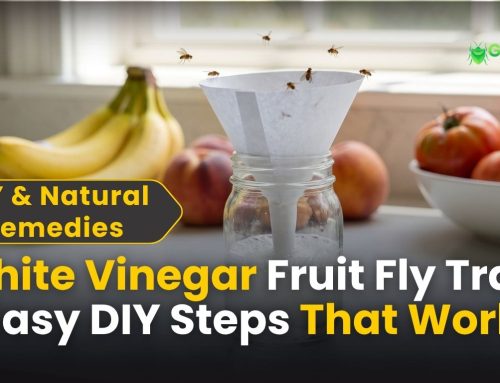
7. Don’t Rely on Apple Cider Vinegar for Fungus Gnats
Apple cider vinegar traps work particularly well as an example of pest-specific behavior.
Fruit flies are attracted to fermentation odors. Fungus gnats are associated much more strongly with moist growing environments.
An apple vinegar fly trap may catch incidental small flies, but it isn’t a primary fungus gnat treatment.
If an ACV trap catches numerous flies while the supposed “fungus gnats” ignore plant monitoring traps, reconsider the identification.
You may actually have fruit flies.
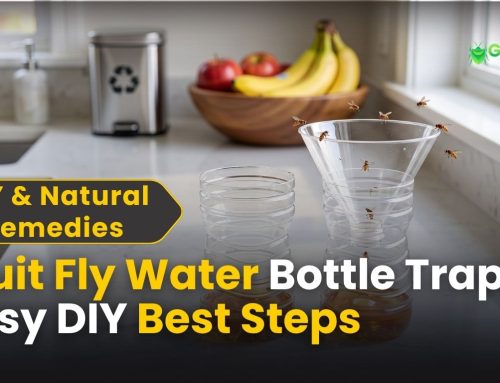
Likewise, a fruit fly water bottle trap is designed around fruit-fly attraction rather than fungus gnat biology.
Treat the species you have, not the species attached to the most popular DIY recipe.
8. Inspect New Plants Before Adding Them to Your Collection
New plants can introduce fungus gnats into an existing indoor garden.
Before placing a new plant among established plants, inspect the growing medium and foliage.
Watch for adults around the pot and consider temporarily separating new arrivals when practical.
This is especially useful for homeowners with large collections. Once fungus gnats become distributed across dozens of pots, figuring out which containers are supporting larvae becomes much more difficult.
Preventing introduction is easier than tracking adults across an entire room.
9. Use Repellents and DIY Products Carefully
Essential oils and other natural repellents are often marketed or recommended for gnats.
Some plant-derived compounds can have repellent or insecticidal effects under particular circumstances, but they should not replace larval habitat management.
There is also the plant itself to consider.
A DIY oil mixture that doesn’t immediately harm a person can still damage sensitive foliage or interact poorly with pets and indoor environments.
Don’t spray homemade essential-oil mixtures onto plants unless you know the plant can tolerate the formulation and its use is appropriate.
Green Pest Management CT’s natural fly repellent guide and DIY pest remedies hub explain why “natural” and “risk-free” are not interchangeable terms.
10. Monitor Until the Fungus Gnat Life Cycle Is Interrupted
You won’t necessarily eliminate every adult immediately after correcting plant conditions.
Immature gnats already present may continue developing for a period.
What you want to see is a downward trend.
Keep sticky cards in appropriate positions and compare adult activity over time. Continue plant-appropriate moisture management and sanitation.
If adult numbers stay high despite correctly managed plants, investigate whether you missed another source.
This can include another plant, recently introduced growing media, or even a misidentified small-fly species.
Monitoring turns guesswork into evidence.
Fungus Gnat Life Cycle: Why They Keep Coming Back
Fungus gnats undergo complete metamorphosis: egg, larva, pupa, adult.
Adults lay eggs in suitable moist organic growing environments. Larvae emerge and feed in the growing medium before pupating and eventually becoming the flying adults homeowners notice.
That is why adult-only control can seem endless.
Kill today’s adults, and immature insects can still become tomorrow’s adults.
Targeting the larval habitat interrupts that replacement cycle.
Development time varies with species and environmental conditions, so avoid relying on rigid promises that an infestation will disappear after a particular number of days.
Measure the direction of the population instead.
Do Fungus Gnats Damage Plants?
Adult fungus gnats are primarily nuisance insects.
Larvae are potentially more important to plant health. They primarily consume fungi and decaying organic matter but can also feed on roots and other plant tissue.
Mature, healthy houseplants may tolerate relatively low populations without obvious damage. Seedlings, cuttings, young plants, and plants already under stress can be more vulnerable.
Don’t diagnose fungus gnat injury based solely on wilting or yellow leaves.
Plant symptoms have many potential causes.
If the plant itself appears unhealthy, combine pest inspection with appropriate horticultural diagnosis.
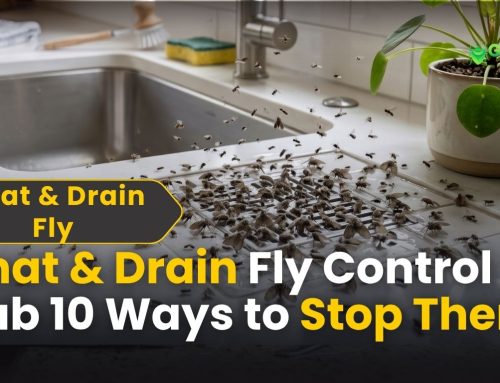
Fungus Gnats vs. a “Fruit Fly Nest in Drain”
This phrase comes up frequently because several small flies can appear in the same kitchen.
Fruit flies don’t build nests in drains. They may develop in suitable fermenting organic material associated with a plumbing environment, but that location is a developmental source rather than a conventional nest.
Fungus gnats are more likely to direct your attention toward plant-growing media.
Drain flies direct attention toward wet organic material.
Fruit flies direct attention toward fermenting food and beverage material.
If you’re unsure which one you have, Green Pest Management CT’s drain fly, gnat, and fruit fly comparison can prevent unnecessary drain treatments.
Common Fungus Gnat Treatment Mistakes
The most frequent mistakes are surprisingly consistent:
- Treating every tiny fly as a fungus gnat.
- Using ACV traps as the primary control for plant gnats.
- Killing adults without managing larvae.
- Watering on a rigid schedule despite wet soil.
- Completely drying moisture-loving plants in an attempt to kill gnats.
- Leaving dead plant material in pots.
- Allowing appropriate plant saucers to remain unnecessarily full of water.
- Treating every plant equally without identifying high-activity pots.
- Using homemade sprays without considering plant injury.
- Applying pesticides without checking whether the product is labeled for the intended use.
- Bringing new plants directly into a large collection without inspection.
- Assuming adult activity will disappear instantly after correcting the source.
Good pest management protects the plant while controlling the insect.
Prevention Tips for Connecticut Houseplants
Prevention starts with growing plants under conditions appropriate for their species.
Inspect growing media before watering. Provide suitable drainage. Remove dead plant matter. Check new plants before grouping them with established collections.
During Connecticut winters, pay particular attention to watering habits.
Indoor light levels and plant water use can change as days become shorter, while heated homes alter humidity. Continuing the same watering schedule used during active summer growth may leave some plants wetter for longer than intended.
There isn’t a universal winter watering schedule.
Check the actual plant and growing medium.
Seasonal Fungus Gnat Activity in Connecticut
Fungus gnats can occur year-round indoors, but seasonal changes can influence how problems develop.
During spring and summer, active plant growth may increase watering. New plants and potting materials also move into homes more frequently.
Warm conditions can support insect development.
During fall, houseplants that spent summer outside may be brought back indoors. Inspect plants before moving them into the main living area or grouping them with a collection.
Winter creates a different challenge. Plant growth may slow, indoor environmental conditions change, and soil can remain wet longer after watering.
The important factor isn’t the month.
It is whether the pot provides suitable larval conditions.
Fungus Gnats in Fairfield County Homes
Houseplant problems occur throughout Greenwich, Stamford, Darien, Westport, Fairfield, Wilton, New Canaan, and Norwalk.
Larger homes in Greenwich or New Canaan may have extensive plant collections spread across multiple rooms, making source mapping particularly useful.
Stamford and Norwalk residents may keep dense plant collections in apartments where containers are grouped near limited natural light. A few affected pots can therefore create noticeable adult activity in a relatively small area.
Darien, Westport, and Fairfield homeowners may bring patio plants indoors as Connecticut temperatures fall.
Wilton properties with sunrooms, greenhouses, or substantial indoor plant areas can present their own source-management challenges.
Location affects the environment, but treatment still follows the same biological principles: identify the insect, locate the affected growing media, manage moisture appropriately, target immature stages when necessary, and monitor.
DIY vs. Professional Fungus Gnat Control
Many fungus gnat problems are well suited to DIY management.
If one or two plants are affected and the source is obvious, appropriate watering changes, sanitation, monitoring, and labeled plant-safe controls may be sufficient.
Professional pest control becomes more useful when the infestation is widespread, identification remains uncertain, flies appear well away from all plants, or source-management efforts consistently fail.
| Situation | DIY Approach | Professional Inspection |
| One affected plant | Usually reasonable | Rarely first step |
| Several plants | Monitor and manage individually | Consider if persistent |
| Large indoor collection | Structured IPM approach | Helpful when source is unclear |
| Flies around plants and drains | Identify first | Useful if uncertain |
| High adult activity after source correction | Continue monitoring briefly | Consider inspection |
| Flies emerging away from plants | Reassess identification | Professional identification useful |
The broader guide on how to get rid of gnats explains when a small-fly problem may no longer be a straightforward plant issue.
What Happens During a Professional Inspection?
Professional fly control starts by determining whether the insect really is a fungus gnat.
A technician can examine specimens and map where adult activity occurs. Plant collections, moisture conditions, nearby drains, food sources, and other possible developmental locations can then be evaluated according to the evidence.
The objective is to rule out fruit flies, drain flies, and other small flies rather than treating everything as a plant pest.
Once fungus gnats are confirmed, the management plan can emphasize growing-media conditions, adult monitoring, source reduction, and appropriate targeted measures.
This is Integrated Pest Management in practical form.
The EPA’s Integrated Pest Management resources explain the broader framework of combining pest identification, monitoring, prevention, and targeted controls.
Green Pest Management CT also provides professional flying insect control services for homeowners when small-fly identification or source control becomes difficult.
When Should You Call Green Pest Management CT?
Consider a professional inspection when adults remain abundant after appropriate plant management, the infestation appears throughout multiple rooms, flies aren’t actually concentrated around plants, or you’re unable to distinguish the insects from drain flies or fruit flies.
Professional identification is particularly valuable when homeowners have already tried several unrelated treatments without success.
If vinegar, drain treatments, sticky cards, and soil adjustments have all been tried against the same unidentified fly, stop changing remedies and identify the insect.
Green Pest Management CT serves Greenwich, Stamford, Darien, Westport, Fairfield, Wilton, New Canaan, Norwalk, and surrounding Fairfield County communities.
Frequently Asked Questions
What is the fastest way to get rid of fungus gnats?
Find the affected plants, manage moisture according to the plants’ needs, remove decaying plant material, monitor adults with sticky cards, and use an appropriately labeled larval control when needed. Targeting both larval habitat and adults is more effective than trapping adults alone.
Why do I have fungus gnats in my house?
Moist plant-growing media provide suitable conditions for fungus gnat larvae. They may be introduced with plants or growing materials, after which persistently favorable moisture can support continued development.
How can I tell fungus gnats from fruit flies?
Fungus gnats are typically slender, dark, and mosquito-like and occur around plants. Fruit flies are more compact and commonly congregate around fermenting produce, beverages, garbage, and recycling.
Do fungus gnats damage houseplants?
Adult fungus gnats are mainly nuisance pests. Larvae can feed on roots, with seedlings, cuttings, young plants, and stressed plants potentially more vulnerable to high populations.
Does apple cider vinegar kill fungus gnats?
ACV traps are primarily useful for attracting fruit flies. They are not a dependable main treatment for fungus gnat larvae developing in potting media.
Should I completely dry my plants to kill fungus gnats?
Not unless that moisture level is appropriate for the plant. Excessive drying can damage moisture-sensitive plants. Modify watering according to the plant’s horticultural requirements.
Do yellow sticky traps get rid of fungus gnats?
Sticky cards capture adults and are excellent monitoring tools, but they do not eliminate larvae in the growing media. Use them as one part of a broader control program.
Are fungus gnats coming from my drain?
Usually fungus gnats are associated with moist growing media, while drain flies commonly develop in wet organic environments. If activity is centered on plumbing rather than plants, reconsider the identification.
Can fungus gnats survive Connecticut winters?
Yes. Indoor heating and moist growing media can support fungus gnat activity regardless of freezing outdoor conditions.
When should I call pest control for fungus gnats?
Consider professional help when identification is uncertain, activity persists after appropriate plant management, numerous areas are affected, or the flies don’t appear to originate from plants.
Conclusion: Fungus Gnat Control Starts in the Pot
The most effective way to solve a fungus gnat infestation is to stop focusing exclusively on the adults flying around your face and start investigating what is happening inside the plant container.
Identify affected plants, manage moisture according to each plant’s requirements, maintain proper drainage, remove decaying organic material, and monitor adults. When necessary, use an appropriately labeled treatment that targets immature stages rather than depending solely on adult traps.
Just as importantly, verify the identification. Fruit flies, drain flies, and fungus gnats may all be described as “tiny gnats,” but they do not share the same breeding sites or treatments.
That identification-first approach is central to Integrated Pest Management and prevents unnecessary applications around Connecticut homes.
For homeowners in Greenwich, Stamford, Darien, Westport, Fairfield, Wilton, New Canaan, Norwalk, and surrounding Fairfield County communities, Green Pest Management CT can provide a professional inspection when a persistent small-fly problem doesn’t respond to appropriate fungus gnat control or the true source remains unclear.