What Color Are Wasps? How to Identify Them Quickly
Introduction
You’re relaxing on your patio in Greenwich when you notice a flying insect circling your drink. Your first instinct is to swat it away, but you freeze. Is it a wasp? A bee? Something more dangerous?
The most obvious question pops into your head: What color are wasps? But here’s the problem you’ve seen different colored insects around your yard, and you’re not sure which ones are actually wasps and which ones might be hornets, yellow jackets, or something completely harmless.
This confusion costs you. You might panic about a harmless species while missing warning signs of actual dangerous insects establishing nests on your property. You might attempt risky DIY removal on something that requires professional handling. Worst case? You get stung because you didn’t recognize the warning signs of an aggressive species.
Learning to identify wasps by color combined with other visual features—takes just minutes and completely changes how you respond to these insects. You’ll stop panicking about harmless species and recognize genuine threats immediately.
Let’s break down what color are wasps so you can identify them confidently and keep your family safe.
Why Wasp Color Matters for Your Safety (More Than You Think)
Most people think color is the only thing that matters for identification. While color is important, it’s not the complete story. However, learning what color are wasps is a powerful starting point because color is visible from distance, visible at a glance, and immediately communicates danger level to your brain.
Here’s why this matters:
- Bright yellow and black = aggressive yellow jacket (high danger, ground-nesting)
- Reddish-brown with yellow = peaceful paper wasp (low danger, structure-nesting)
- Black with white markings = dangerous hornet (very high danger, tree-nesting)
- Metallic black = non-aggressive mud dauber (zero danger, solitary)
When you understand wasp colors, you instantly know threat level. You know whether to calmly walk inside or maintain distance. You know whether that nest requires professional removal or can stay where it is.
Let’s identify the colors so you’re never confused again.
Yellow and Black Striped Wasp: What You’re Really Looking At
This is the most visually striking wasp color pattern and the one that causes the most identification confusion.
Bright, Vivid Yellow and Black (Yellow Jackets)
When you see bright yellow combined with bold black stripes, you’re almost certainly looking at a yellow jacket. The yellow is vivid and fluorescent—not a dull or muted yellow, but an aggressive, in-your-face brightness that demands attention.
The stripes are geometric and regular, creating a warning pattern. This coloration is called “aposematic coloration”—it’s literally designed by nature to warn predators: “I sting, and I’m dangerous.”
What This Color Tells You:
Yellow jackets are the most aggressive and problematic wasp species in Connecticut. They’re ground-nesters that form massive colonies underground. They’re attracted to human food and garbage. They attack unprovoked and in swarms. A single yellow jacket sting is painful; multiple stings are dangerous.
Danger Level: HIGH
Never attempt DIY removal of ground yellow jacket nests. Never attempt to seal entrances or spray nests. The insects are too aggressive and will attack. Professional removal is essential.
What to Do:
Keep food and garbage sealed. Avoid outdoor meals during peak season (late summer/early fall). If you discover a ground nest (entrance hole in yard with insects coming and going), maintain distance and contact professionals immediately for safe removal.
For detailed yellow jacket information, see our comparison guide for wasp vs hornet vs yellow jacket.
Reddish-Brown with Yellow Markings (Paper Wasps)
Sometimes you’ll see insects with yellow and black coloring that’s NOT vivid and bright. Instead, the base color is reddish-brown or dark brown with less prominent yellow markings. These are paper wasps, completely different species with completely different threat levels.
The Color Difference:
- Yellow jackets: Bright, vivid, almost fluorescent yellow
- Paper wasps: Earthy brown base with muted yellow markings
The difference is visible once you train your eye to see it. Yellow jackets demand visual attention with their brightness. Paper wasps are warmer and less striking.
What This Color Tells You:
Paper wasps are beneficial insects that hunt pest insects for food. They’re not aggressive by default. They defend nests if directly threatened but are peaceful everywhere else. They can coexist peacefully on your property without creating safety concerns.
Danger Level: LOW TO MODERATE
Paper wasps are manageable. A nest on your eave might be left alone if it’s not in a high-traffic area. Nests in problematic locations can be carefully removed.
What to Do:
Observe from distance. If nest is away from where family gathers, consider leaving it for the natural pest control it provides. If location is problematic, professional removal is available and straightforward.
Reddish-Brown Wasps: Identifying Paper Wasps by Color Alone
Beyond just the yellow markings, the base color of reddish-brown wasps is distinctive and reliable for identification.
Paper Wasp Coloration Details
Paper wasps range from lighter reddish-brown to very dark brown, depending on species and individual variation. However, they consistently have:
- Brown base color (earthy, warm tones, never bright)
- Yellow or orange markings (present but not vivid)
- Smooth, hairless texture (not fuzzy like bees)
- Slender body shape (thin waist is visible)
How to Identify by This Color:
If you see a reddish-brown or dark brown insect with yellow markings, you’re looking at a paper wasp. The brown coloring immediately tells you it’s not a yellow jacket. The slender body tells you it’s not a hornet. You can identify this insect as a paper wasp with confidence.
Nesting Behavior:
Paper wasps build umbrella-shaped, open-comb nests under eaves, porch ceilings, pergolas, and other structures. The nests are visible—not hidden underground or in trees 40 feet up. You can see the individual hexagonal cells.
Safety Implications:
These nests are usually manageable. The wasps aren’t inherently aggressive. Many property owners leave paper wasp nests undisturbed, appreciating the pest control they provide.
Black and White Wasp Identification: Spotting Dangerous Hornets
When you see black and white wasp coloring, you’re looking at something genuinely dangerous that requires a completely different response than paper wasps.
The Distinctive Black Body with White Facial Markings
Bald-faced hornets (which are technically true hornets, not wasps) have black bodies with distinctive white or cream-colored facial markings. The white face pattern is absolutely unmistakable no other Connecticut insect looks like this.
They also have white stripes running along the abdomen against the black body. The contrast between black and white is high and visible from considerable distance.
What This Color Pattern Tells You:
When you see a large insect with a white face on a black body, you’re looking at a bald-faced hornet one of the most dangerous and aggressive stinging insects in North America. These are not to be approached. Not to be swatted. Definitely not to be DIY removed.
Danger Level: VERY HIGH
Bald-faced hornets are aggressively territorial. They’ll pursue threats from 50+ feet away. They attack in coordinated groups from their large colonies (100-400+ individuals). Multiple stings are common. Their venom is potent.
What to Do:
If you see a black and white insect that size, maintain distance immediately. Never approach. If you discover a large gray papery nest in a tree (bald-faced hornet nest), contact professionals for immediate removal assessment. This is a legitimate emergency.
For complete information on this dangerous species, see our guide on what does a hornet look like.
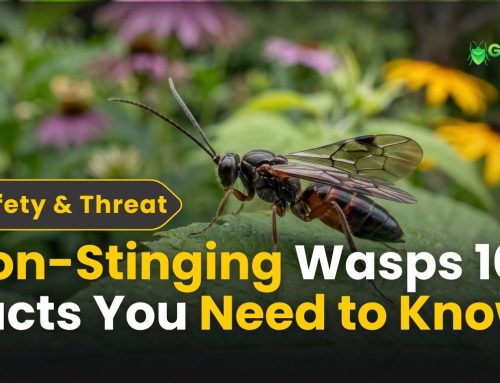
Metallic Black Wasps: Non-Aggressive and Beneficial
You might see a black insect with a shiny, gleaming appearance that looks completely different from other wasps. This is likely a mud dauber a solitary wasp that’s absolutely harmless.
The Distinctive Metallic Appearance
Mud daubers have shiny, reflective, metallic black bodies some species with a blue metallic sheen. The body gleams and reflects light in a way that regular wasps don’t. This metallic appearance is the key identifying feature.
What This Color and Appearance Tell You:
Mud daubers are solitary wasps focused entirely on hunting spiders. They’re not social. They’re not aggressive. They won’t bother you or your family. They’re beneficial for natural spider control.
Danger Level: NONE
Mud daubers pose zero threat to humans. They won’t sting unless actually grabbed, which is essentially impossible in normal circumstances. No removal is needed.
What to Do:
Leave them alone. Appreciate the spider control they’re providing. Their nests (distinctive organ-pipe-shaped mud tubes) will be abandoned at season’s end and won’t be reused. No action required.
Orange Wasps: Are They Dangerous?
You might encounter a wasp with orange or orange-red coloring and wonder: are orange wasps dangerous?
The answer depends on what species you’re looking at.
Orange-Colored Paper Wasps (Not Particularly Dangerous)
Some paper wasp species have orange or reddish-orange coloring instead of brown. These are the same peaceful, beneficial insects as their brown cousins. The orange coloring doesn’t change their behavior.
Danger Level: LOW
These are handled the same as brown paper wasps observe from distance, appreciate the pest control, leave alone if nest location is acceptable.
Orange-Colored Solitary Wasps (Completely Safe)
Some solitary wasp species have orange or orange-red coloring. These are typically larger, more substantial insects, but they’re still solitary and non-aggressive.
Danger Level: NONE
These are completely harmless. They’re focused on their own hunting and reproduction, not interacting with humans.
European Hornets with Orange-Brown Coloring (Dangerous)
European hornets have brown and orange-yellow coloring—completely different from the black and white of bald-faced hornets. These are true hornets, large and aggressive.
Danger Level: HIGH
European hornets are dangerous and require professional removal. If you see a large, robust insect with brown and orange-yellow coloring, treat it as a potential hornet and maintain distance.
The Key Distinction:
Size and body robustness matter. Slender orange insects are likely harmless. Large, robust orange-colored insects are likely dangerous European hornets.
Comparison Table: Wasp Colors and What They Mean
Use this table to quickly identify wasps by color and understand threat level.
| Wasp Color | Species | Body Shape | Size | Danger Level | Action |
| Bright yellow + black | Yellow jacket | Robust | ½-¾ inch | VERY HIGH | Professional removal |
| Brown + yellow | Paper wasp | Slender | ½-¾ inch | LOW | Observe, may leave alone |
| Black + white marks | Bald-faced hornet | Robust | ¾-1 inch | VERY HIGH | Professional removal |
| Metallic black | Mud dauber | Very slender | 1-1.5 inches | NONE | Leave alone |
| Brown + orange | European hornet | Robust | ¾-1.25 inches | HIGH | Professional removal |
Body Parts of Wasps: How Color Works with Other Features
Understanding what color are wasps is most powerful when combined with other observable features.
How Color Combines with Body Shape
Slender body + brown/yellow color = paper wasp (low danger)
Robust body + bright yellow/black = yellow jacket (high danger)
Robust body + black/white = hornet (very high danger)
Color alone isn’t enough but color combined with body shape gives you reliable identification.
How Color Works with Wing Position
Paper wasps hold their wings in a roof-like position over their backs. This creates a peaked appearance visible when the insect is at rest.
Yellow jackets and hornets hold their wings flat against their bodies. This flat position is visible and combines with their color for identification.
How Color Relates to Nesting Location
Bright yellow insects nest underground (yellow jackets). Brown and yellow insects nest on structures (paper wasps). Black and white insects nest in high trees (bald-faced hornets). Metallic black insects nest in mud tubes on walls (mud daubers).
The nesting location often gives you the first clue about what you’re observing. The color confirms the identification.
Flying Insects That Look Like Wasps: Color-Based Confusion
Sometimes what you think is a wasp is actually something else entirely. Understanding what color are wasps helps you distinguish them from similar insects.
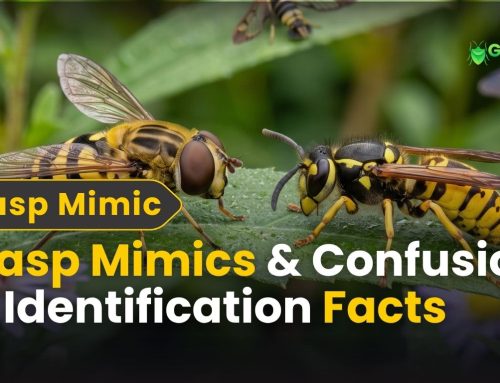
Wasps vs. Bees by Color
Bees are often fuzzy and round-bodied, while wasps are smooth and slender. However, coloring can create confusion:
Honeybees:
- Fuzzy, hairy body
- Golden-yellow and brown coloring
- Round, substantial appearance
- Docile behavior
Wasps:
- Smooth, hairless body
- Bright yellow, reddish-brown, or black coloring
- Slender appearance
- More aggressive behavior
The fuzziness is the key distinction bees are fuzzy, wasps are smooth.
Wasps vs. Flies by Color
Some large flies can resemble wasps at first glance, particularly if they have striping or dark coloring. However:
Flies:
- Only 2 wings (wasps have 4)
- Large eyes relative to head size
- Shorter body overall
- Different flight patterns
Wasps:
- 4 wings
- Smaller eyes
- Longer, more defined body
- Purposeful flight pattern
Geographic Patterns: Wasp Colors in Connecticut
Different areas of Connecticut see different concentrations of wasp species based on the environment.
Coastal Areas (Greenwich, Stamford, Darien)
Most Common Colors:
- Bright yellow and black (yellow jackets are attracted to food sources)
- Reddish-brown with yellow (paper wasps on structures)
- Black with white (bald-faced hornets in wooded areas)
These areas have abundant human activity, outdoor food sources, and mature trees—ideal for multiple wasp species.
Suburban Residential (New Canaan, Wilton, Westport)
Most Common Colors:
- Reddish-brown with yellow (paper wasps are very common)
- Black with white (bald-faced hornets in forest areas)
- Metallic black (mud daubers on structures)
Larger properties with mixed landscaping support diverse wasp populations.
Building Cavities (All Connecticut Areas)
European Hornets with Brown and Orange Coloring
These invasive hornets are increasingly nesting in building cavities throughout Connecticut. Their brown and orange coloring is distinctive and different from native species.
Why Color-Based Identification Sometimes Fails
Understanding wasp colors is powerful, but it has limitations you should know about.
Lighting Changes How Colors Appear
Bright sunlight shows colors differently from overcast light. Indoor lighting is different from outdoor lighting. The same wasp might appear in different colors in different lighting conditions.
Solution: Observe in good lighting when possible. Don’t rely on color alone if observation conditions are poor.
Individual Variation Within Species
Not all individuals of the same species look identical. Color intensity varies. Stripe patterns vary slightly. One yellow jacket might appear brighter yellow than another.
Solution: Use color as primary identification, but combine with body shape, size, and behavior for confirmation.
Dirty or Aged Insects
Wasps that have been foraging or are nearing the end of life might appear dustier or less vibrant in color.
Solution: Look for the base color pattern, not perfect color clarity.
Pro Tips for Quick Wasp Identification by Color
Observe from Distance
Use binoculars or zoom camera to see colors clearly without approaching. Stay 10+ feet away.
Look for the Brightest Color First
Bright yellow and black immediately identifies yellow jackets. This is the most distinctive color pattern. If you see this, you’ve identified high-danger insects.
Note the Contrast Level
High contrast (bright yellow + solid black, black + white, metallic + dark) is easier to identify than subtle color variations.
Consider the Context
Ground-nesting insects with bright yellow coloring = yellow jackets. Structure-nesting insects with brown coloring = paper wasps. Tree-nesting insects with black/white coloring = hornets.
Take Photos
If you’re unsure about colors, photograph the insect from distance. Photo color might be clearer than what you observed visually.
Real Stories: How Color Recognition Prevented Problems
Story 1: The Bright Yellow Identification (Stamford)
“My kid came inside saying there were ‘super bright yellow bugs’ coming out of a hole in the ground near the sandbox. I immediately recognized the vivid yellow and black coloring as yellow jackets from this guide. We kept everyone away from that area and called professionals. They confirmed it was a massive underground colony. Recognizing that color pattern saved my children from a dangerous encounter.” Sarah P., Stamford, CT
Story 2: The Metallic Black Relief (Westport)
“I found a large shiny black insect on my garage wall and panicked, thinking it was a dangerous hornet. The metallic appearance and the mud tubes nearby told me it was a mud dauber. Instead of calling for removal, I left it alone and it finished its nesting. Learning that metallic black = harmless eliminated unnecessary fear.” — Tom R., Westport, CT
FAQ: Questions About Wasp Colors and Identification
What’s the most dangerous wasp color combination?
Bright yellow and black (yellow jackets) and black with white facial markings (bald-faced hornets) are the most dangerous. Both are highly aggressive. If you see either of these color patterns, maintain distance and contact professionals if nesting near your home.
Can wasps change color?
Wasps don’t change color voluntarily, but lighting and environmental conditions affect how colors appear. A yellow jacket appears brighter in sunlight than in shade. Dust or debris can dull colors.
Are all brown and yellow insects paper wasps?
Not necessarily. Some solitary wasps have brown and yellow coloring. However, if the insect has a slender body, holds wings roof-like at rest, and nests on structures, it’s almost certainly a paper wasp.
What’s the difference between yellow jackets and paper wasps by color?
Yellow jackets: Bright, vivid, fluorescent yellow that dominates the coloring
Paper wasps: Earthy brown base color with less prominent yellow markings
The yellow in yellow jackets is unmistakably bright. The yellow in paper wasps is more subtle.
How can I tell if a black insect is a hornet or a mud dauber?
Mud dauber: Metallic, gleaming appearance; very thin body; 1+ inches long
Hornet: Matte black appearance; robust, thick body; white markings usually visible
The metallic shine is the key distinction.
Don’t Let Confusion About Wasp Colors Stop You from Protecting Your Family
Understanding what color wasps are gives you the power to identify them quickly, assess threat level accurately, and respond appropriately.
You now know:
- Bright yellow and black = aggressive yellow jackets (high danger)
- Reddish-brown with yellow = peaceful paper wasps (low danger)
- Black with white = dangerous hornets (very high danger)
- Metallic black = harmless mud daubers (no danger)
- Brown and orange = dangerous European hornets (high danger)
This knowledge eliminates uncertainty. When you see an insect, you immediately know what it is and what to do about it.
Get Professional Confirmation When You’re Uncertain
If you’ve spotted a wasp or hornet you can’t confidently identify by color, or if you’ve found a nest and want a professional assessment before taking action, our team is here to help.
We provide expert color-based and complete identification throughout Connecticut from Greenwich to Westport and everywhere in between. We accurately assess danger levels and provide safe, professional removal when needed.
Take action now—identify what’s in your yard and get the protection your family deserves.