Ant Behavior Facts Fascinating Best Secrets & Solutions 2026
INTRODUCTION
You wake up Saturday morning in your Stamford kitchen to discover hundreds of ants marching across your countertops like a tiny army claiming territory. Within hours, they’ve infiltrated your pantry, contaminated food, and established what looks like permanent residence.
This scenario plays out in thousands of Connecticut homes every year, from Greenwich to Westport. But here’s what most people don’t realize: understanding ant behavior facts fascinating enough to change your approach is the key to stopping infestations before they become disasters. These tiny insects aren’t mindlessly wandering your home—they’re operating with sophisticated intelligence, complex communication systems, and organizational structures that would astound you.
This comprehensive guide reveals the fascinating ant behavior facts that explain why ants succeed where you fail at DIY control. You’ll discover how ants communicate through pheromones, understand their complete lifecycle, and learn why knowing these secrets transforms your ability to eliminate infestations permanently. Let’s explore the hidden world of ants and take back control of your Connecticut home.
THE FASCINATING WORLD OF ANT BEHAVIOR FACTS
Why Understanding Ant Behavior Changes Everything
When most people encounter ants, they reach for a spray. But killing visible ants addresses only symptoms, not the underlying problem. Understanding ant behavior facts reveals why this approach fails repeatedly.
Ants operate as a superorganism. Individual ants lack intelligence they’re not decision-makers. But the colony functions almost like a single organism with collective intelligence. When you kill individual ants with spray, the colony adapts instantly, sending replacements along the same path. The infestation accelerates rather than stops.
This is why professional pest control works differently. Understanding ant behavior, professionals target the entire colony, particularly the queen, rather than individual workers. This fundamental difference explains why DIY approaches fail while professional solutions succeed.
The colony structure explains everything. The queen reproduces continuously, sometimes laying thousands of eggs daily. Worker ants, the ones you see, have zero reproductive capability but an incredible work ethic. Soldier ants defend the colony. Male ants serve only reproductive functions. This rigid hierarchy makes colonies nearly indestructible unless the queen is eliminated.
Each ant type plays a specific role in the overall colony function. Remove workers, and the colony sends more foragers. Kill soldier ants, and the defensive capability adapts. But eliminate the queen, and the entire colony collapses within weeks the fundamental reason why colony elimination matters more than individual ant destruction.
The Scout Ant: Your First Warning Sign
Ant behavior facts about scout ants reveal how infestations actually begin. Understanding this process helps you catch problems early before populations explode.
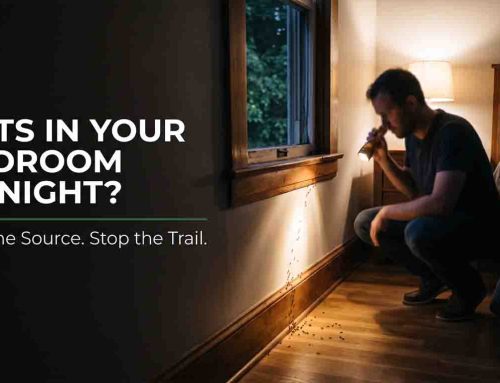
A single scout ant enters your home through a crack invisible to human eyes. This scout doesn’t go straight to your kitchen randomly. It systematically explores, investigating crevices, following scent trails from previous ants, and hunting for resources. The scout’s sole purpose is to discover food, water, or potential nesting sites.
This is where the infestation truly begins. If the scout finds nothing valuable, it returns to the colony and reports failure (through chemical signals). But if it discovers food—even microscopic crumbs invisible to your eyes—something remarkable happens. The scout returns and releases a special pheromone trail connecting the food to the colony entrance.
Within hours, dozens of ants follow this chemical highway. If the food source is substantial, hundreds arrive. The colony has successfully recruited workers to exploit a new resource. What started as a single scout becomes an organized invasion force established in your home.
This escalation happens within 24 hours. By the time you notice the infestation, it’s already well-established. This is why early detection and immediate action prevent disasters.
HOW ANTS COMMUNICATE: THE PHEROMONE SECRETS
Decoding the Chemical Language Driving Infestations
Understanding how ants communicate pheromones is crucial for understanding why certain solutions work while others fail repeatedly. This chemical communication system is far more sophisticated than most people realize.
Pheromones are chemical signals creating an invisible communication network. Unlike humans using words, ants use approximately 20 different pheromone types, each triggering specific behaviors. Different pheromones convey different messages: food location, danger alerts, mate attraction, territorial boundaries, and colony identity.
The trail pheromone is most relevant to home infestations. When a scout discovers food, it deposits this pheromone along the path between food and colony. Other ants detect this chemical highway through smell, following it with perfect accuracy. The pheromone concentration increases as more ants travel the path, creating an increasingly attractive trail recruiting even more ants.
This explains the visible ant trails you see. These aren’t random wanderings they’re chemical highways. Ants walking the same path repeatedly strengthen the pheromone signal, recruiting more ants in a reinforcing cycle. The trail becomes progressively busier as colony recruitment accelerates.
This explains DIY spray failure. When you spray ants walking a pheromone trail, the chemical markers remain active in your home. Within 24-48 hours, new ants detect the same pheromone trail and follow it to the food source that your spray eliminated. They replace dead ants precisely because the chemical highway remains functional.
Professionals understand this fundamental behavior, using different approaches targeting the pheromone system itself rather than just individual ants. Professional solutions address root causes; DIY sprays address only symptoms.
Alarm Pheromones and Colony Defense
Fascinating ant behavior facts about alarm pheromones explain why infestations sometimes escalate dramatically when you attempt control.
When ants are threatened or crushed, they release alarm pheromones alerting nearby ants to danger. This triggers defensive behavior—soldier ants mobilize, foraging workers accelerate, and recruitment intensifies. The entire colony essentially goes on high alert.
This explains a common observation: after spraying visible ants, people often report MORE ants appearing, not fewer. The spray triggered alarm pheromone release, which recruited reinforcement instead of deterring them. Your control attempt backfired, actually escalating the problem.
Professional pest control accounts for this behavior, using methods that eliminate the colony before triggering widespread alarm responses.
THE ANT LIFECYCLE: UNDERSTANDING POPULATION EXPLOSION
From Egg to Worker: Rapid Development in Your Home
Ant behavior facts about lifecycle patterns explain why infestations explode so quickly. Understanding this rapid reproduction is crucial for appreciating why immediate action matters.
The complete lifecycle from egg to adult worker takes 3-4 weeks in warm conditions. Your heated Connecticut home during winter provides ideal conditions for accelerated development. What this means practically: if you discover ants in February, by March you could have a colony ten times larger.
The process begins with eggs—so microscopic you’d never see them. Eggs hatch into larvae after 7-14 days depending on temperature. Larvae grow rapidly, molting multiple times. The pupal stage follows, lasting another 1-2 weeks. Finally, adult ants emerge fully formed and capable of working immediately.
The queen controls everything. She can produce thousands of eggs daily during peak season. She regulates reproduction through pheromones ensuring worker focus remains on survival rather than reproduction. A single queen can create an empire of millions within months.
This rapid reproduction explains why established infestations become impossible to control through DIY methods. The colony grows faster than DIY treatments can eliminate populations. Only professional intervention targeting the queen stops the exponential growth.
Seasonal Behavior Changes You Should Know
Ant behavior facts shift throughout seasons, affecting infestation timing and severity. Understanding these patterns helps you implement seasonal prevention strategies.
Spring activation brings colony expansion. As temperatures rise, queens accelerate egg-laying. Workers expand foraging territories aggressively. Ants become increasingly visible as activity peaks.
Summer represents maximum colony population and maximum aggression. Resource demands increase. Multiple colonies may compete for territory. Infestations reach peak severity during summer months.
Fall triggers colony consolidation. Ants prepare for winter by establishing food stores and moving deeper into protected areas. Some colonies establish satellite nests in warmer locations like inside homes.
Winter forces ants indoors seeking warmth and food stores. Your insulated Connecticut home becomes paradise for ants escaping freezing temperatures. Winter infestations concentrate in basements, wall voids, and heated interior spaces.
This seasonal pattern means your prevention and control strategies must adapt seasonally. Winter inspection catches ants before they establish permanent residence in your walls.
WHY ANTS INVADE YOUR CONNECTICUT HOME
The Behavior Drivers Behind Home Infestations
Ants don’t invade homes randomly. Specific attractants trigger invasion behavior. Understanding what draws ants helps you prevent infestations before they start.
Food sources attract scouts relentlessly. Ants can detect food sources from surprising distances. A single crumb from yesterday’s snack becomes a recruitment highway for thousands. Sugary foods attract ants intensely because they provide immediate energy. Protein sources (grease, meat, dead insects) attract different species equally intensely.
Water sources matter just as much. Ants need moisture for survival. Leaking pipes, bathroom condensation, and damp basement soil create perfect conditions for colony establishment. Some ant species require moisture as desperately as they require food.
Shelter from weather attracts strategic nesting. Connecticut winters are harsh. Your insulated home maintains comfortable temperatures year-round while outdoor ants face freezing conditions. This temperature contrast makes your home irresistibly attractive to winter-seeking ants.
Darkness and protection appeal to ant instincts. Wall voids, basement areas, and under-appliance spaces provide perfect nesting conditions. Ants prefer dark, protected areas where they can excavate galleries safely. These hidden nesting sites are why visible ant trails represent only a fraction of the actual infestation.
Understanding these attractants reveals prevention strategy: eliminate food sources, fix water leaks, seal entry points comprehensively, and remove clutter providing shelter. Address these fundamentals and infestations cannot establish.
THE PROBLEM: WHY YOUR HOME ATTRACTS ANTS
Real Infestation Scenarios Across Connecticut
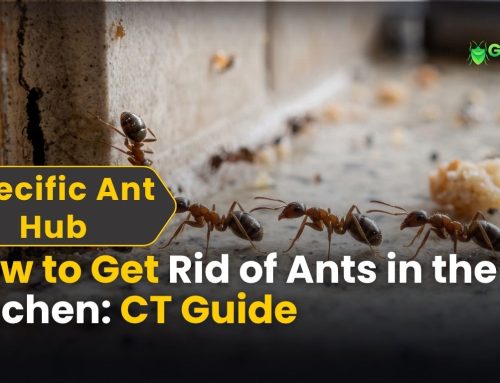
The kitchen nightmare. Sugar ants discover a dropped cookie in your Darien kitchen. The scout recruits hundreds within hours. By morning, your entire kitchen counter hosts an organized highway. Food contamination spreads. Every pantry item becomes suspect. Your kitchen the heart of family life feels violated and dangerous.
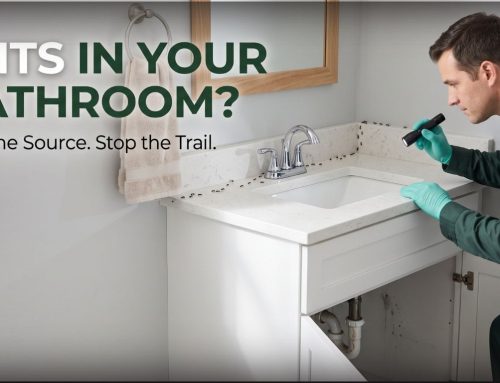
The bathroom crisis. Moisture from shower steam and leaking pipes attracts ants to your Westport bathroom. The humid environment provides ideal conditions for satellite nests. Ants appear in unexpected places your medicine cabinet, bathroom vanity, even your toothbrush area. The thought of ants crawling near your family during bathing triggers genuine alarm.
The wall invasion. Carpenter ants discover damaged wood in your New Canaan home’s exterior. They excavate galleries inside walls, expanding territory silently. Months pass before damage becomes visible. By then, thousands of ants have caused significant structural damage requiring expensive repairs.
The basement establishment. Moisture from condensation and soil dampness attracts ants to your Stamford basement. They establish permanent nesting sites in wall voids. The colony expands upward through your home systematically. Winter brings explosive population growth as ants cluster for warmth.
Each scenario starts small a single scout and escalates to disaster within weeks. This is why understanding ant behavior facts transforms from intellectual curiosity to urgent necessity.
WHY DIY SOLUTIONS FAIL: THE HARD TRUTH
The Gap Between Visible Results and Actual Elimination
Most Connecticut homeowners try DIY control first. They purchase over-the-counter products, apply them around visible trails, and observe immediate results. Ants disappear. Problem solved, right?
Wrong. This satisfaction is dangerously deceptive.
Spray kills visible workers but ignores the colony. The queen continues reproducing. Pheromone trails remain active. New workers simply replace dead ones within hours. The infestation hasn’t been stopped it’s been momentarily stunted. Your temporary relief creates false confidence while the problem deepens.
Why bait placement fails for most homeowners. Even when attempting bait solutions, homeowners often place them haphazardly without understanding ant behavior patterns. If bait isn’t positioned along active pheromone trails where ants naturally travel, they ignore it. Even effective baits require 5-7 days for queen elimination. Impatient homeowners abandon baits prematurely, mistakenly concluding they don’t work.
Wrong product for wrong species equals failure. Different ant species require different elimination approaches. What works for sugar ants fails for carpenter ants. Without proper species identification, you’re guessing. Most homeowners skip identification entirely, purchasing generic products that provide temporary relief but never elimination.
The contamination risk remains. DIY applications around food preparation areas pose contamination risks. Even approved pesticides can cause problems if applied incorrectly. You’re essentially experimenting on your family’s safety.
Professional pest control works differently—targeting the entire colony through approaches accounting for ant behavior patterns and species-specific requirements.
WHAT WORKS: PROFESSIONAL SOLUTIONS EXPLAINED
Why Professional Intervention Succeeds Where DIY Fails
Professional pest control begins with what DIY typically skips: proper ant species identification. Different species respond to different treatments. Professionals identify your specific ant species, then select treatment approaches matched to that species’ behavior patterns.
Next, professionals locate nesting sites. These hidden colonies represent the actual problem. Visible trails are merely highways connecting colony to food. Professionals eliminate the source, not just the symptoms.
Professional bait placement accounts for ant behavior. Professional-grade baits are positioned directly along active pheromone trails where ants naturally travel. Baits are designed specifically for species being controlled. Worker ants carry poison back to the queen, eliminating her specifically. Without the queen, the colony collapses within 1-2 weeks.
Combination approaches accelerate results. Professionals don’t rely solely on baits. They combine targeted spray applications for exposed nesting sites, bait stations for internal populations, and barrier treatments preventing new invasions. Multiple simultaneous approaches address visible and hidden populations.
Prevention implementation prevents reinfestation. After eliminating the active infestation, professionals seal entry points comprehensively, identify and eliminate food sources, and remove conditions attracting ants. This comprehensive prevention means ants don’t simply reinvade within weeks.
Follow-up monitoring ensures complete success. Professional treatments include follow-up inspections verifying complete elimination. They adjust treatment if necessary and document success. This accountability distinguishes professional service from DIY attempts.
EXPERT TIPS: LEVERAGING ANT BEHAVIOR KNOWLEDGE
Pro Recommendations Based on Understanding Behavior Patterns
Timing determines success probability. Early detection and immediate action prevent populations from reaching critical mass. Spring detection requires immediate action before summer explosion. Fall prevention stops winter invasions. Winter inspection catches ants before they establish permanent residence. Delay of even one week allows exponential growth.
Placement matters more than product. With baits, positioning along actual ant highways determines effectiveness. Random placement achieves nothing. Baits must be where ants naturally travel. Observation of ant trails reveals correct placement locations. This attention to behavior detail separates successful treatments from failed attempts.
Species identification changes everything. Investing time identifying which specific ant species you’re facing prevents wasted effort on wrong approaches. Fire ants require completely different strategies than pavement ants or carpenter ants. Misidentification guarantees treatment failure.
Elimination without prevention guarantees reinfection. Killing existing ants while leaving entry points open simply invites new colonies. Prevention strategies must accompany elimination. Sealing entry points, eliminating attractants, and removing moisture sources prevent future invasions permanently.
Document what works. Keep records of infestation locations, timing, and treatment approaches attempted. This documentation guides future prevention efforts and helps professionals understand your specific situation.
CUSTOMER SUCCESS STORIES: REAL RESULTS
How Understanding Ant Behavior Transformed Connecticut Homes
The Stamford Kitchen Recovery. A family discovered sugar ants throughout their kitchen in April. They tried three different store-bought products over two weeks, with temporary relief each time. Ants returned worse than before. After consulting professionals who understood ant behavior patterns, they received targeted bait placement combined with prevention measures. The infestation was eliminated within two weeks. Six months later, zero ant activity confirmed permanent success.
The Greenwich Prevention Victory. A homeowner learned about ant behavior facts and implemented comprehensive prevention, sealing entry points, eliminating water sources, removing food attractants, and scheduling regular inspections. Five years later, they’ve prevented any infestation. This proactive approach costs minimal investment while preventing all ant problems completely.
The Darien Structural Damage Prevention. A family spotted carpenter ants in their home’s second story. Rather than attempting DIY elimination, they immediately contacted professionals understanding carpenter ant behavior. Early intervention prevented structural damage and eliminated the colony before extensive excavation occurred. The family learned that professional intervention prevents expensive repairs.
These stories illustrate a consistent pattern: understanding ant behavior and acting decisively prevents disasters. Delay and DIY attempts lead to escalated infestations and expensive consequences.
PRACTICAL ACTION CHECKLIST
Steps for Effective Ant Control Based on Behavior Understanding
Immediate Actions: Identify the exact ant species invading your home (sugar ants, carpenter ants, pavement ants)
Locate visible ant trails and determine origin point
Eliminate accessible food sources completely
Fix any visible water leaks or moisture problems
Document infestation timeline and severity
Professional Assessment: Contact professionals for species confirmation and colony location identification
Get detailed treatment plan explaining approach and timeline
Ask about prevention measures they’ll implement post-elimination
Understand follow-up inspection schedule
Prevention Implementation: Seal all visible cracks and entry points after elimination
Establish rigorous food storage and cleanliness protocols
Fix moisture issues completely
Clear vegetation from foundation perimeter
Schedule quarterly inspections during peak seasons
COMPARISON TABLE: CONTROL METHODS EVALUATED
| Method | Effectiveness | Speed | Safety | Results |
| Spray (DIY) | Temporary relief only | Immediate | Moderate risk | Returns in 24-48 hrs |
| Bait (DIY) | Variable (species/placement dependent) | 3-7 days | High safety | Sometimes permanent |
| Natural Remedies | Short-term repellent | Slow | Very safe | Usually temporary |
| Professional Treatment | Complete colony elimination | 1-2 weeks | Controlled application | Permanent with prevention |
| Diatomaceous Earth | Moderate effectiveness | 1-2 weeks | Very safe | Usually temporary |
FAQ: ANT BEHAVIOR AND CONTROL QUESTIONS
Questions About Ant Behavior Facts and Effective Solutions
How quickly can an infestation grow from a single scout ant?
A single scout discovering food can attract hundreds within 12 hours and thousands within 24 hours through pheromone recruitment. Within 2-3 weeks, a full productive colony establishes. This exponential growth is why acting immediately matters. Delay of even days allows populations to become exponentially larger.
What exactly are pheromones and how do ants use them?
Pheromones are chemical compounds ants produce and release into their environment. Different pheromone types trigger different behaviors. Trail pheromones create chemical highways guiding ants to food. Alarm pheromones alert the colony to danger. Ants detect pheromones through smell, creating sophisticated communication despite individual ants lacking intelligence.
Why do professional treatments work better than products I can buy?
Professional treatments succeed because they target the entire colony, particularly the queen, rather than just visible workers. Professionals use species-specific approaches based on ant identification. They place treatments strategically based on behavior patterns rather than randomly. Professional prevention simultaneously prevents reinfection.
How long does complete colony elimination take?
Bait treatments typically require 3-7 days to completely eliminate colonies. During these days, you may see increased ant activity as baits work. Spray treatments provide immediate visible results but rarely eliminate entire colonies. Complete professional elimination with follow-up confirmation typically requires 1-2 weeks.
What’s the difference between summer and winter ant behavior?
Summer brings peak activity with maximum foraging and colony expansion. Winter forces ants into survival mode seeking indoor warmth. Colonies retreat into protected areas like walls and basements. Winter represents peak risk for home invasion as ants seek shelter from freezing outdoor temperatures.
Why do ants suddenly appear after I’ve sprayed?
Spray kills visible workers but doesn’t eliminate the queen or infestation source. Pheromone trails remain active recruiting replacement workers. Within 24-48 hours, new ants follow existing chemical highways to the same food sources. More ants appear because the colony recruitment system remains fully operational.
TAKE ACTION IMMEDIATELY: YOUR HOME NEEDS PROTECTION
Don’t delay professional assessment if you’ve discovered ants in your Greenwich, Stamford, Darien, New Canaan, Wilton, or Westport home. Understanding ant behavior facts fascinating enough to recognize the seriousness means you know that single scouts today become thousands tomorrow.
Act now because:
Small infestations become catastrophic within weeks if ignored. Spring detection requires summer action before populations explode. Food contamination spreads through your entire pantry unchecked. Structural damage accumulates silently with carpenter ants. Your family’s health risk increases daily while infestation expands.
Contact professionals immediately if you’ve already discovered ants. Every day of delay allows colony expansion. Early intervention prevents the exponential growth that turns minor problems into disasters.
Implement prevention strategies immediately even without current infestation. Seal entry points. Eliminate food and water sources. Begin regular monitoring. Prevention always beats treatment.
Request a professional assessment today even if you’re uncertain whether you have an infestation. Professional inspection identifies problems before they establish. Early detection prevents all subsequent problems.
Book your professional ant assessment now. Let professionals understanding ant behavior eliminate your infestation comprehensively and permanently. Your Connecticut home deserves better than endless ant battles and failed DIY attempts.